Overview
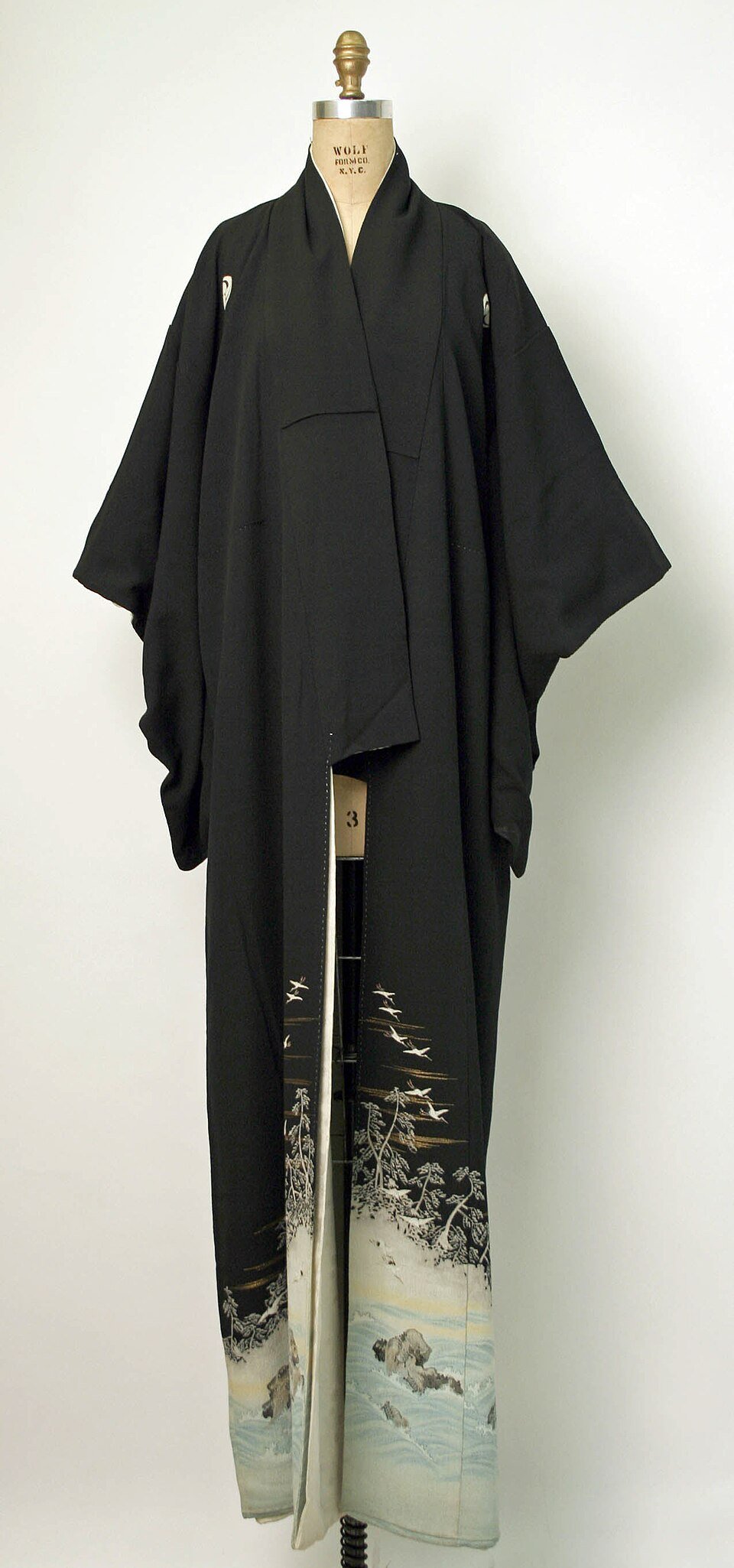
A kimono is cut from straight lengths of cloth into a robe with a wide body and sleeves and a deep front overlap. It is worn by all, in grades of formality set by fabric, pattern, and sleeve length, and is secured entirely by wrapping and tying rather than by buttons.
How it is worn
The left side is always wrapped over the right — right-over-left is reserved for dressing the dead — the excess length is folded up at the waist, and an obi holds everything in place. Formality rises with longer sleeves, more subdued or more auspicious motifs, and a greater number of family crests.
History
The garment took its mature form from the Edo-period kosode. After the Meiji Restoration brought Western dress, the word kimono spread as the name for traditional clothing as opposed to yōfuku, and today it is worn chiefly for ceremonies, festivals, and other formal occasions.