Overview
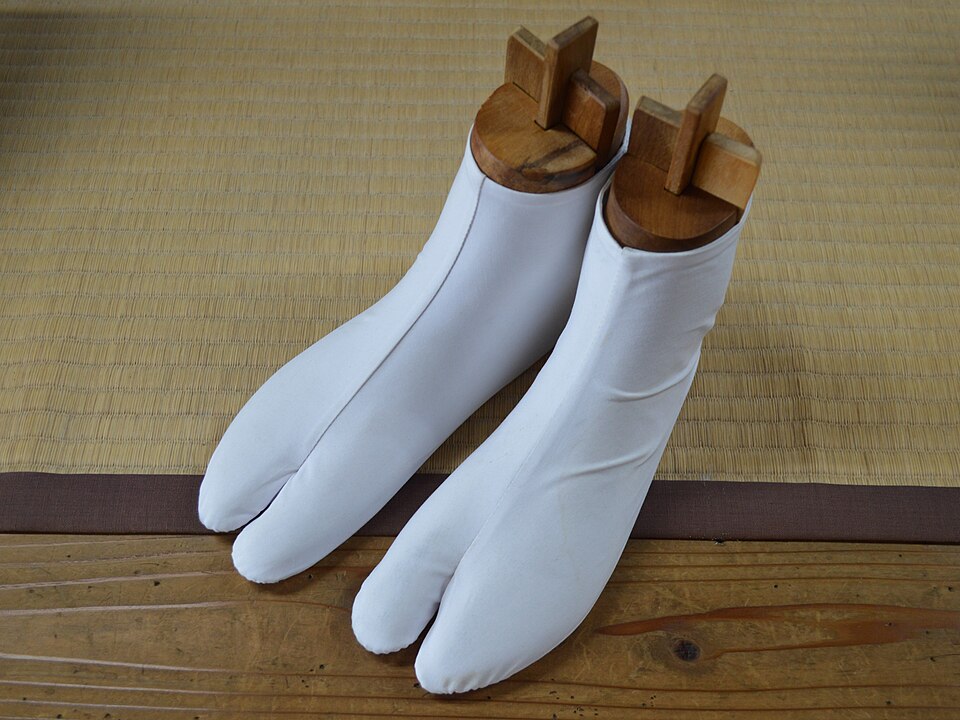
The split is the whole point: a geta or zōri thong passes between the first and second toes, and a normal sock cannot go under one. Tabi are cut from woven cloth with no give — cotton for everyday, silk for formal wear — so they are shaped by pattern rather than by stretch, and they close along the back of the ankle with a column of small clasps called kohaze that hook into loops. White is formal, indigo and black are ordinary, and the sole is a separate, heavier piece.
How it is worn
You put the foot in with the clasps open, pull the back closed and hook them from the bottom up; a correctly sized pair is tight enough that the cloth does not wrinkle at the instep, which is what a formal fitting is judged on. They are worn with sandals indoors and out, and with nothing else on the foot when walking on tatami. The outdoor working version, jika-tabi, puts a rubber sole on the same split-toe shape and is still standard for scaffolders and gardeners.
History
Split-toe footwear follows the thonged sandal, and both are older than Edo, but the clasped, closely fitted tabi is an Edo form: earlier versions tied with cords, and the kohaze arrives with the cotton trade that made the sock cheap. Cotton tabi became one of the ordinary purchases of a city household, and the trade left the specialist shops that still sell them by width. Jika-tabi were developed in the early twentieth century and are the reason the shape is familiar on building sites rather than only under kimono.