Overview
Two and a half centuries of peace turned the kosode into the kimono. With no wars to fund and a merchant class growing rich under a system that ranked them at the bottom, dress became the field on which wealth and taste were contested — and the government kept legislating against it.
Key garments and style
The obi is the visible change. A narrow tie at the start of the period, it widened steadily until it was a broad stiff sash tied in elaborate knots at the back, and it reorganised the whole silhouette. Long-sleeved furisode marked unmarried young women; men wore kimono with haori and hakama, with the kamishimo as samurai formal dress.
Technique flourished. Yuzen paste-resist dyeing, from the late seventeenth century, allowed painterly designs in many colours; shibori tie-resist and stencilled komon covered the rest of the range.
Sumptuary edicts against merchant luxury were issued repeatedly, and the response was to move the display where it could not be seen — extravagant linings, plain-looking outer silks of enormous cost, restrained browns and indigos with the work hidden inside. That is the origin of iki, the understated chic that remains the period’s aesthetic legacy.
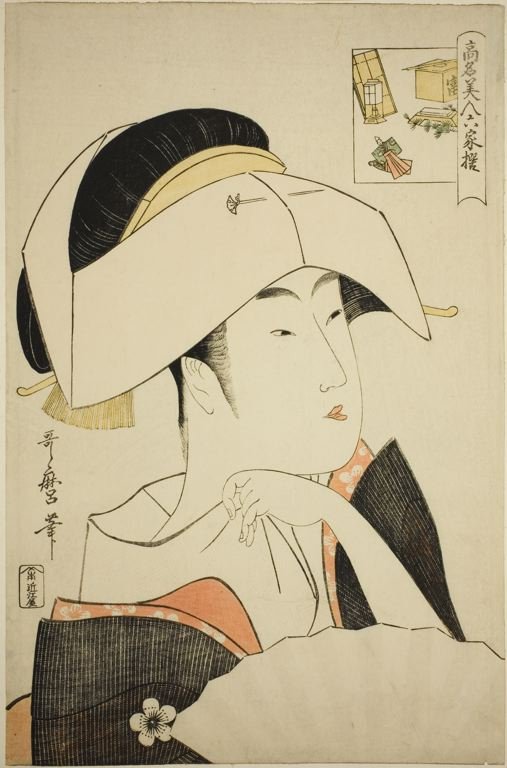
Ukiyo-e prints of actors and courtesans functioned as fashion plates, and the cotton yukata moved from the bathhouse into summer streetwear.
Transition
The Meiji opening brought Western dress and, with it, the reclassification of all of this as traditional.