Overview
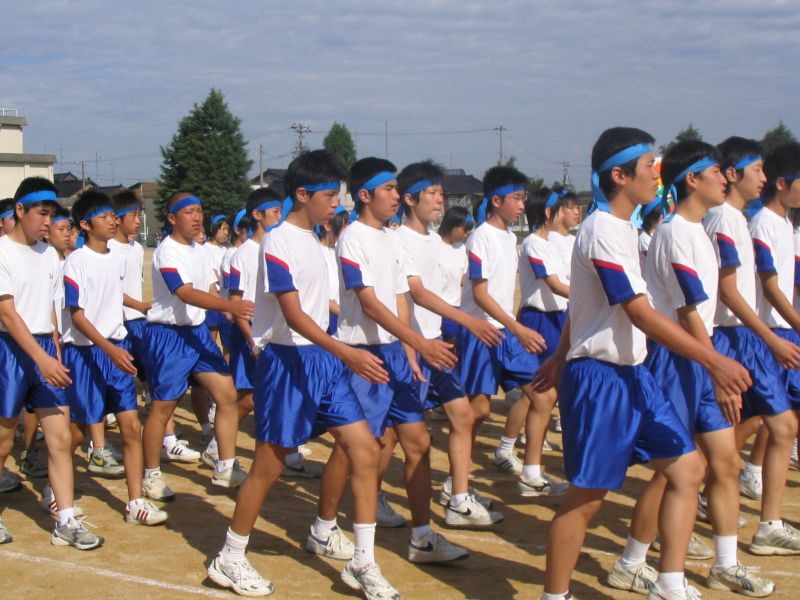
It is a strip of cotton, usually white and about five centimetres wide, tied at the back of the head or at the side with the ends left hanging. Many carry writing — a slogan, a shrine name, a single word like victory or effort — and some carry the rising sun. The knot is the whole design: a flat tie for work, a twisted rope tie called nejiri hachimaki for festivals, which sits higher and does not slip.
How it is worn
It goes on the bare forehead, low enough to catch sweat and high enough not to sit on the brows, and is pulled tight; a loose one reads as costume rather than work. For a festival it is twisted before tying so the band holds its shape under a portable shrine. It is not removed indoors the way a hat is, because it is not treated as headwear so much as a state the wearer is in.
History
Cloth bound at the forehead appears early in Japanese religious and military dress, and the everyday hachimaki settles into its present form in the Edo period among craftsmen, firefighters and festival companies. Wartime propaganda attached it to sacrifice, and photographs of kamikaze pilots wearing one fixed that association abroad. In Japan it went back to being what it had been: the sign that someone has decided to work hard at something.