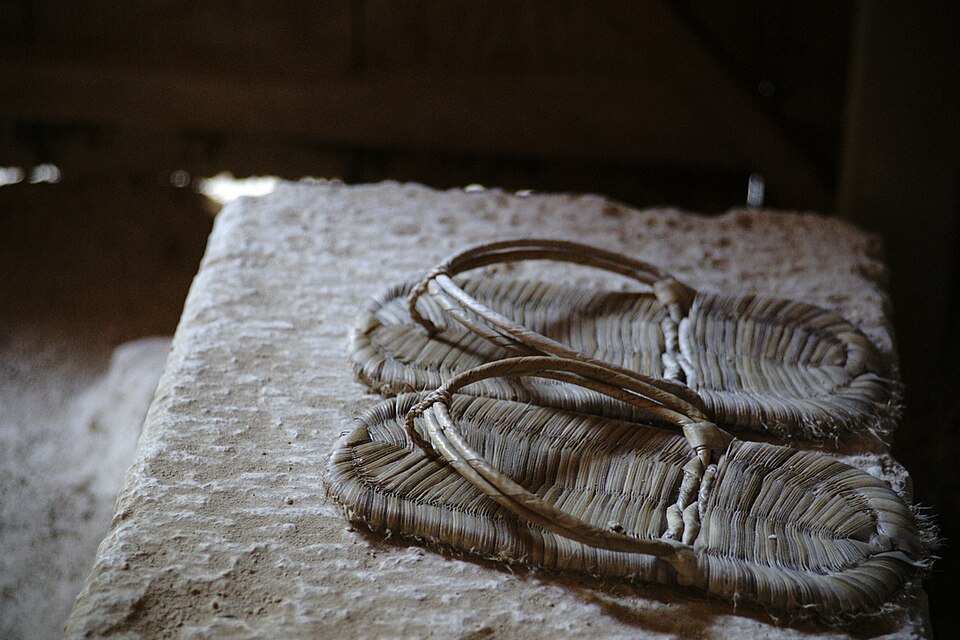
Overview
The sole is flat or slightly wedged, rising a little at the heel, and is finished in leather, lacquered wood, vinyl or woven rush; the thong, the hanao, is a padded cord covered in cloth that matches or answers the kimono. Formality is read off the material: a lacquered or brocade-covered sole with a fine hanao is dress wear, a rush-covered one is not. Height is the other signal, since a taller sole reads as more formal on a woman’s zori.
How it is worn
They are worn with tabi, and the foot is not meant to fill them: the heel sits at the very back edge and the toes stop short of the front, so a centimetre or two of sandal shows behind the heel. The thong is gripped between the first two toes and the gait is short, which is what the kimono wants anyway. A new hanao is stiff and rubs, so it is worked loose by hand before wearing.
History
Thonged straw sandals are ancient in Japan, and the zori separates from the rougher waraji and the raised geta over the Edo period, when townspeople’s dress made a formal flat sandal worth distinguishing. Rice straw and rush gave way to leather and then to vinyl and synthetic soles in the twentieth century, which is why the sandal survived the collapse of everyday kimono wearing. The setta, a leather-soled zori with a metal heel plate, is the male dress form.