Overview
Colonial North America dressed by origin and by supply. Each European power transplanted its own clothing, and each colony then adapted it to what could actually be got — which meant homespun for most people, imported finery for a few, and a genuine exchange with Indigenous dress that ran in both directions.
Key garments and style
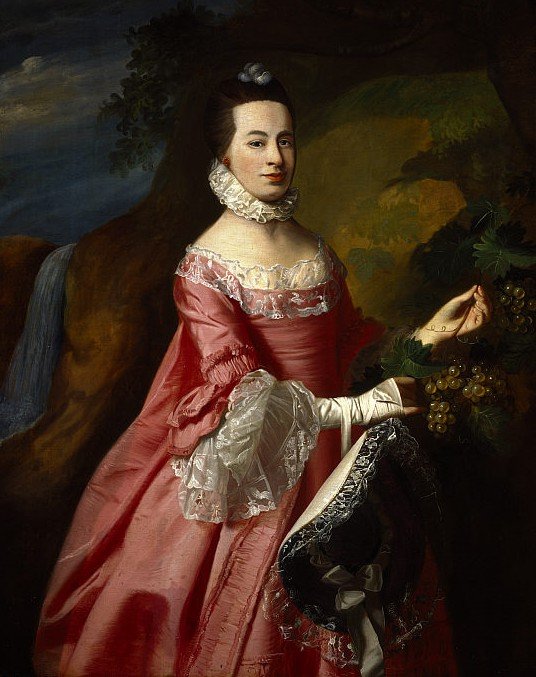
The European wardrobe was breeches, waistcoat and coat for men, and gown with stays for women, in wool and linen. New England Puritan dress ran to plain dark cloth as a matter of conviction, with colonies legislating against display; southern planters imported silks and had themselves painted in them. Between those poles, most colonists wore linsey-woolsey and other homespun, and spinning and weaving were ordinary household work.
Indigenous dress absorbed European materials without becoming European: wool trade cloth for leggings and blankets, glass beads and silk ribbon worked into beadwork and ribbon appliqué that became defining traditions in their own right. Traffic ran the other way too — moccasins, leggings and hunting shirts were adopted by frontier settlers because they worked better than what they had brought.
Enslaved people were issued coarse cloth by allowance, and what they made of it, including headwraps, is among the few areas where their own choices are recoverable.
Transition
The revolutionary decades made plain domestic cloth a political statement, and the frontier hunting shirt became a patriotic uniform.