Overview
Spanish America governed by category, and dress was where category became visible. The casta system sorted people by descent, and what a person was permitted or expected to wear followed — so colonial clothing is less a fashion history than an administrative one.
Key garments and style
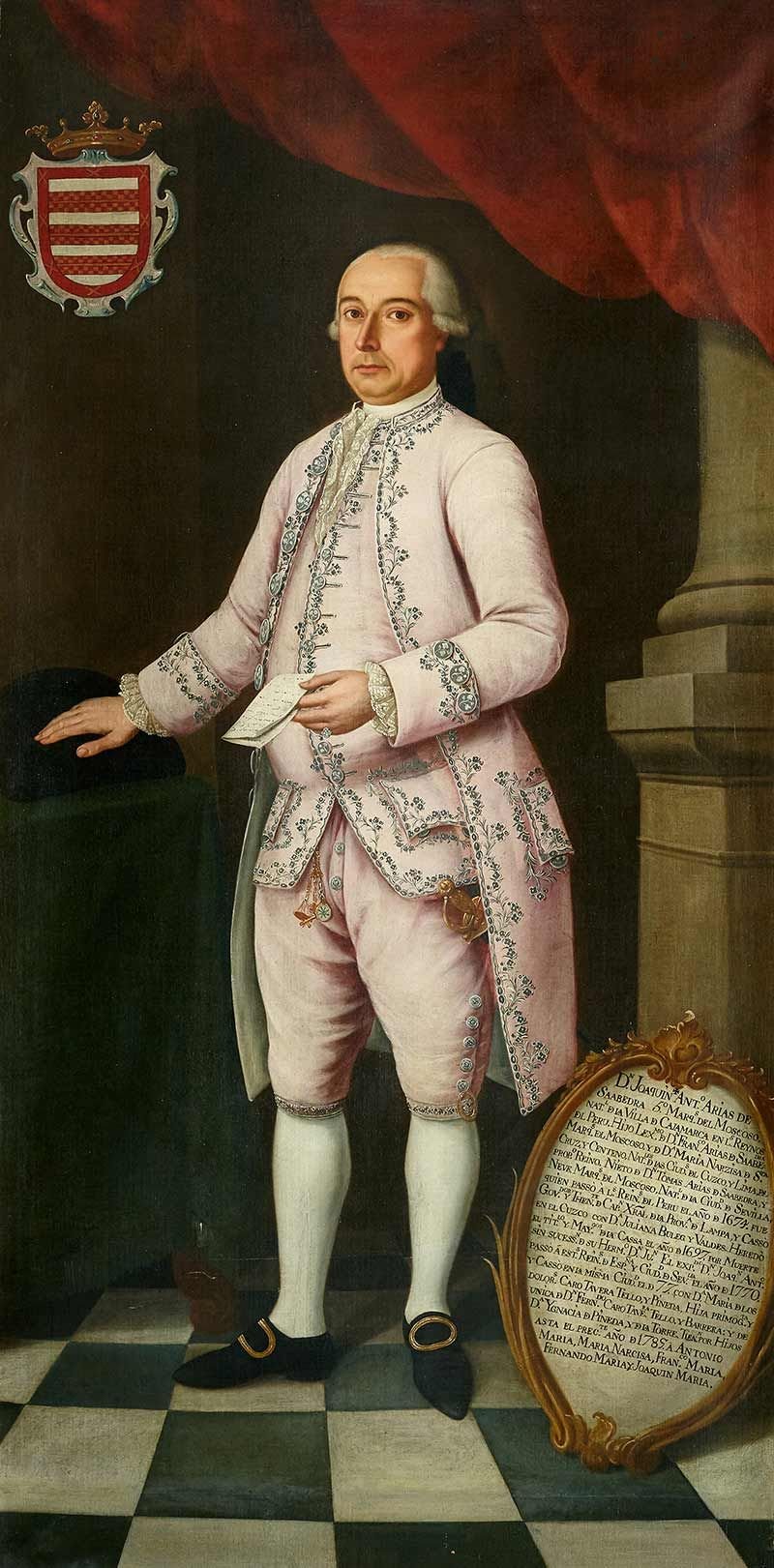
The Spanish and creole elite dressed to European fashion, imported or copied, with the finest cloth arriving through a controlled trade. Indigenous communities kept the wrapped and woven garments of the Andes, and the two met in the mestizo dress that is now read as traditional: the pollera, a full gathered skirt of Spanish descent, worn with the Andean lliclla shawl pinned across the shoulders, and later the montera hat.
Cloth was also an instrument of extraction. Obrajes, the colonial textile workshops, ran on coerced Indigenous labour and produced cheap wool for the internal market, so weaving shifted from a household art to a system of forced production.
The clearest evidence that dress was understood as political comes after the Túpac Amaru revolt of 1780. The reprisals banned Inca noble dress along with the language, the portraits and the theatre — the colonial authorities identifying a wardrobe as a claim to sovereignty and legislating accordingly.
Transition
Independence produced republican dress and the rural costumes of the gaucho and the llanero, while the pollera and the montera stayed and are now worn as Andean identity rather than as colonial category.