Overview
South America wears Western clothes and, in large parts of the Andes, wears something else at the same time. Indigenous dress here is not ceremonial revival but ordinary daily clothing for millions of people — which makes the continent unusual, since most places where that was once true no longer are.
Key garments and style
The Andean women’s outfit is the most recognisable: layered gathered polleras, an embroidered blouse and a shawl fastened at the chest, with a bowler hat above. The hat has a well-attested origin story, arriving as surplus stock intended for British railway workers in Bolivia around the 1920s and being taken up by Aymara and Quechua women, who have worn it ever since. Cholita is the term now used with pride, and cholita fashion shows and wrestling have made it a public style rather than a rural survival.
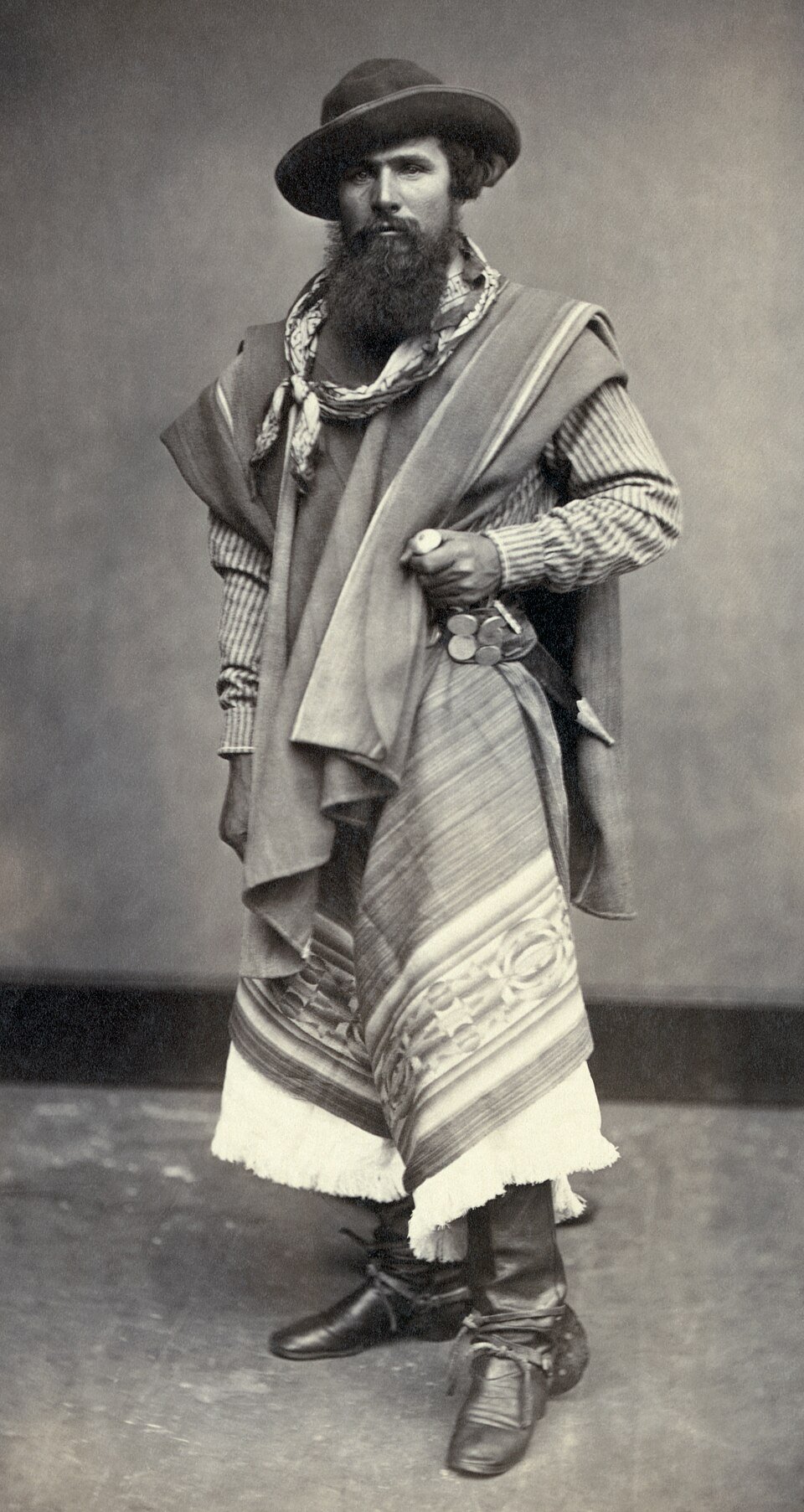
The poncho and handwoven cloth continue across the highlands, and the gaucho outfit of the pampas persists in rural Argentina and Uruguay as working dress and as national costume.
The continent also produces at scale for the global market: Brazilian swimwear and havaianas, Colombian and Peruvian garment manufacture, and a design sector in São Paulo.
Transition
Andean and pampas dress continue as living clothing inside the same global fashion system as anywhere else.