Overview
Ptolemaic Egypt did not have one way of dressing. It had two, side by side for three centuries: the Greek-speaking population of Alexandria and the settlements wore Greek clothes, while the Egyptian countryside and the temples kept Egyptian linen. Dress was among the sharper markers of which of those worlds a person belonged to, and unlike language or cult it was legible at a distance.
Key garments and style
Greek dress meant the chiton, a tunic pinned or sewn at the shoulders, worn under the himation, a rectangular mantle wound about the body; men added the Macedonian chlamys and the flat felt kausia. Egyptian dress kept the linen it had always used — the long sheath-like kalasiris for women, the wrapped kilt for men, pleated and worn white. Linen was not merely habit: priests were required to wear it and barred from bringing wool into the sanctuary, so the Greek fibre could not follow the Greek cut into an Egyptian temple even where the wearer was willing.
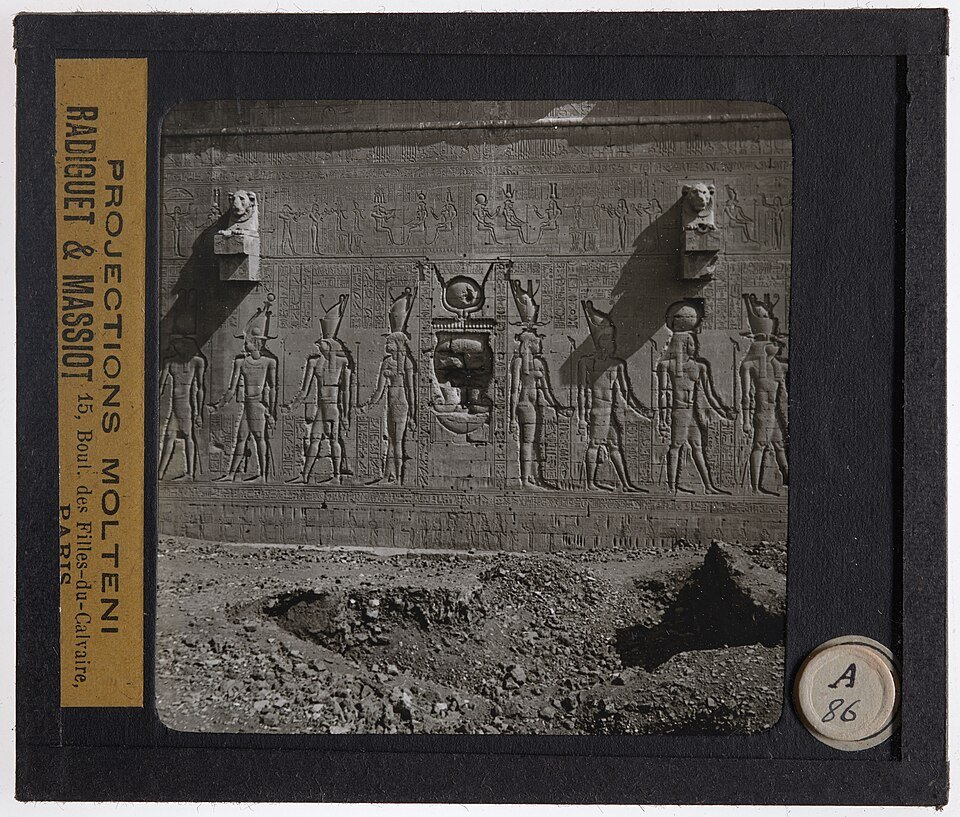
The court dressed in both vocabularies deliberately. On coins the Ptolemies wear the plain white diadem that marked a Hellenistic king; on temple walls at Edfu and Dendera the same rulers appear in full pharaonic regalia, and Cleopatra VII is shown each way. The two also merged: the fringed mantle knotted between the breasts, the knot of Isis, is a Greek mantle tied so that it reads as Egyptian, and it becomes a signature of Ptolemaic sculpture.
Transition
When Rome annexed Egypt the dual system did not break so much as gain a third layer. Roman cut and Roman fashion entered at the top, and the result is recorded with unusual directness in the Fayum mummy portraits of the following centuries, where Egyptian burial practice frames a face painted in Roman dress and Greek-style jewellery.