Overview
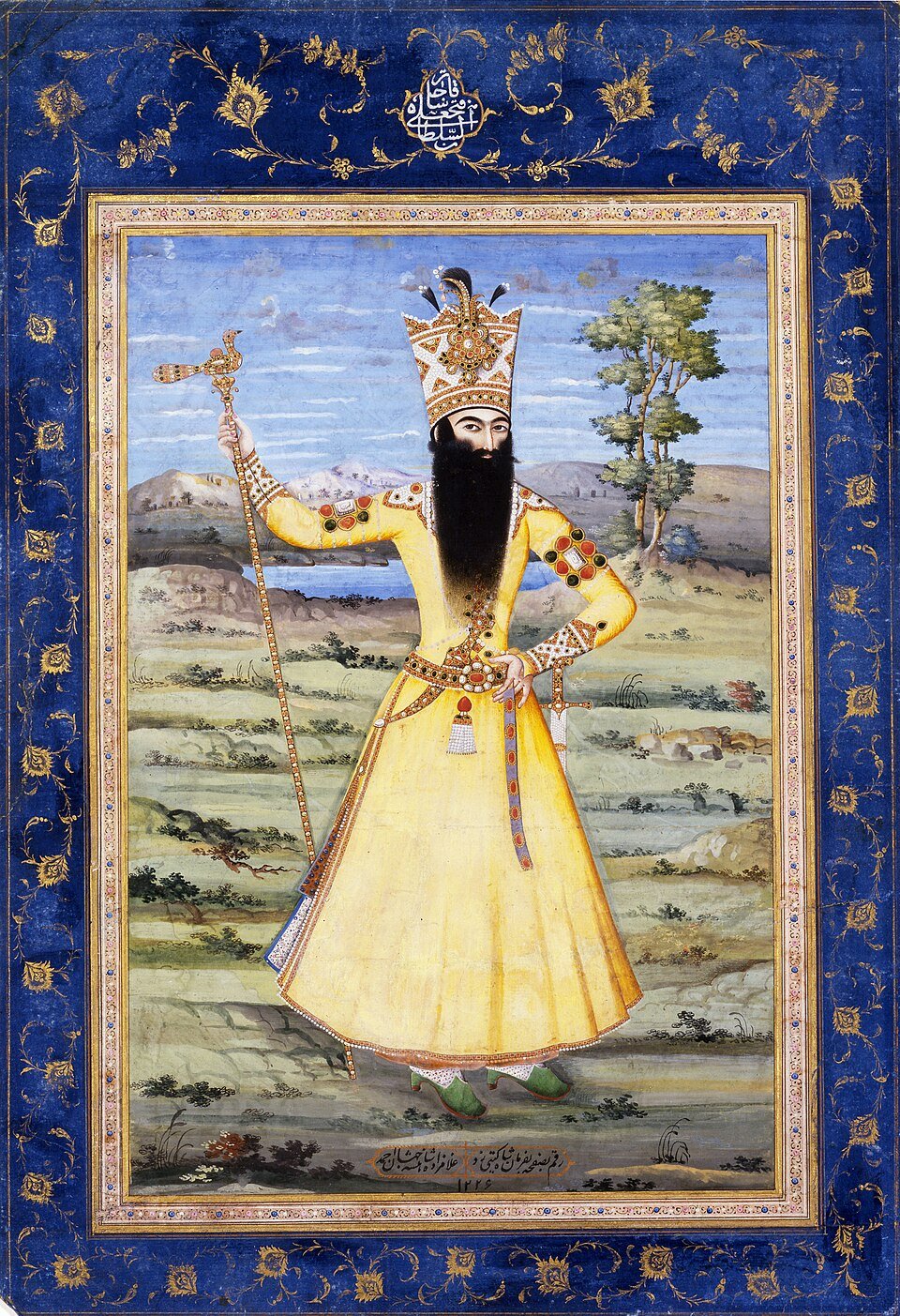
Qajar Iran is the best-pictured period in Iranian dress history, because the dynasty took up first large-scale oil portraiture and then, under Naser al-Din Shah, photography — the shah was an enthusiastic photographer who had his court, his household and himself recorded in quantity. For once the clothing of a Persian century can be looked at rather than reconstructed.
Key garments and style
The male court silhouette is a long belted robe over trousers, with a tall black lambskin hat, and a full beard; ministers and courtiers appear in this uniform through most of the century, increasingly with European decorations pinned to it. Naser al-Din Shah’s own portraits, weighted with jewels and orders, set the tone.
The famous women’s garment is the shaliteh, a short, very full gathered skirt worn over white leggings, which replaced longer skirts in the royal household from mid-century. It is usually credited to the shah’s visits to European ballet and opera, brought home as a court fashion — a rare case of a European borrowing that produced something no European wore. Outside the household, women in public wore the enveloping chador and face veil, so the two are not alternatives but layers of different settings.
Painters including Kamal-ol-Molk recorded the look at the end of the period, by which time photography was already doing the same job.
Transition
Reza Shah’s dress reforms of the 1920s and 1930s ended it deliberately: European hats and suits were mandated for men, and the 1936 unveiling decree banned the chador outright — dress used as an instrument of state, in the opposite direction from the Ming.