Overview
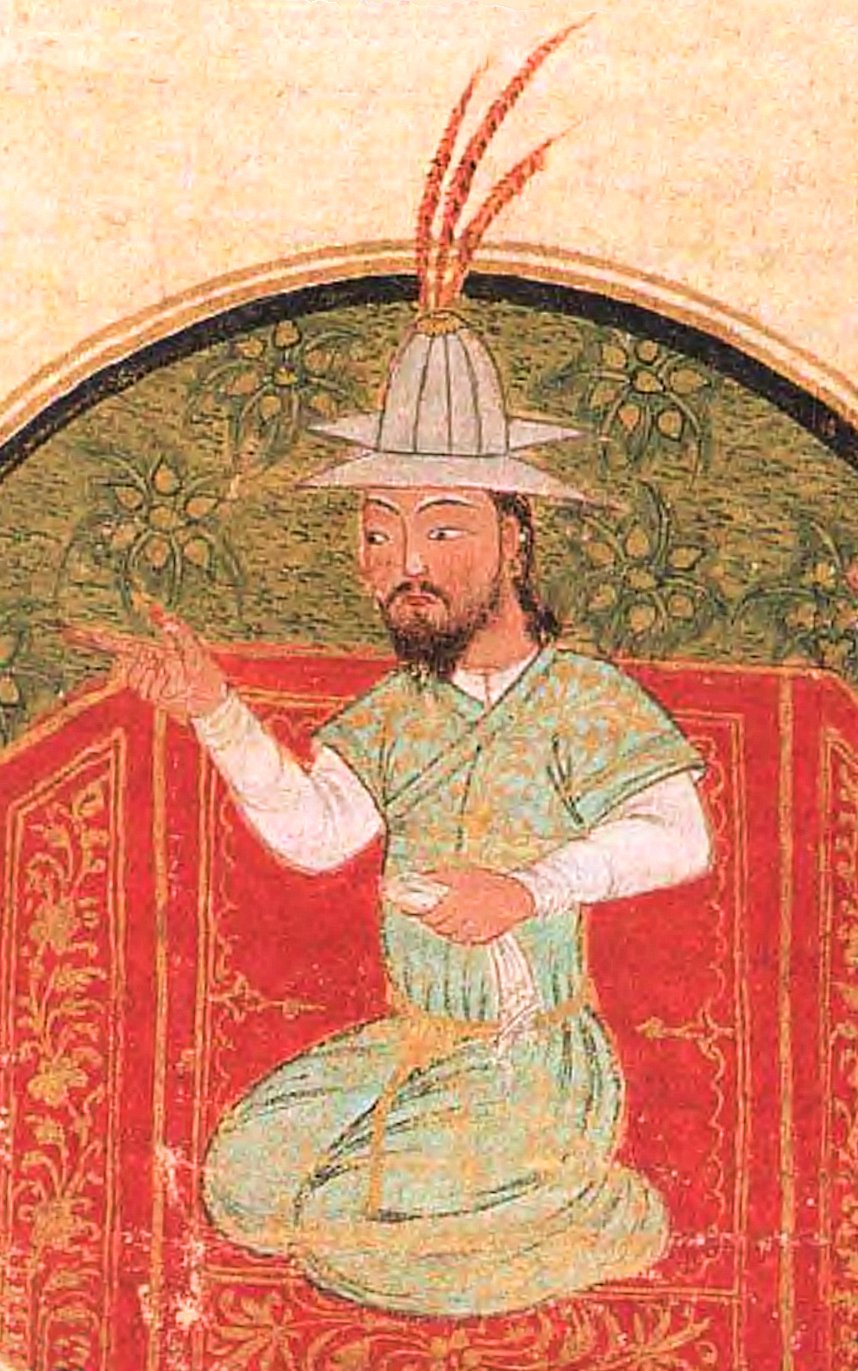
Timurid dress is known with unusual precision for a fifteenth-century court, because the same court perfected the illustrated manuscript. Persian miniature painting reached its height at Herat, and its painters recorded clothing at a scale of a few centimetres with the pattern of the cloth legible.
Key garments and style
The male silhouette is a long robe, cut close through the chest and flaring below, crossing at the front and held by a sash at the waist, worn over trousers and boots with a turban wound on the head. Over it might go a wider coat with hanging sleeves, a form inherited from the Mongol century.
The textiles are the point. Timurid silks carry patterning descended from both the Persian and the Chinese repertoires — the Mongol conquests having connected them — with lotus, cloud band and floral scrolls woven and embroidered in fine repeat.
Bihzad, working at Herat late in the century, is the painter usually named, and the manuscripts of his circle show the dress in detail: layered robes, patterned sashes, and turbans wound differently by rank and profession. Timur’s own campaigns had brought weavers and craftsmen to Samarkand by force, which is part of why the material culture is so accomplished.
Transition
The Safavids replaced the Timurid turban with one wound about a tall red baton, the taj, making a religious and dynastic allegiance visible on the head.