Overview
Three decades of war produced the most extravagant dress in Japanese history. Warlords who had won their positions rather than inherited them spent conspicuously, and the kosode became the surface on which that was displayed — the shortest and loudest period in the long story of the garment.
Key garments and style
Tsujigahana is the period’s signature: stitch-resist dyeing, where areas are tightly bound and stitched before dyeing, finished with ink drawing and often heightened with gold leaf and embroidery. It is technically demanding, was made for perhaps a century, and was never revived successfully.
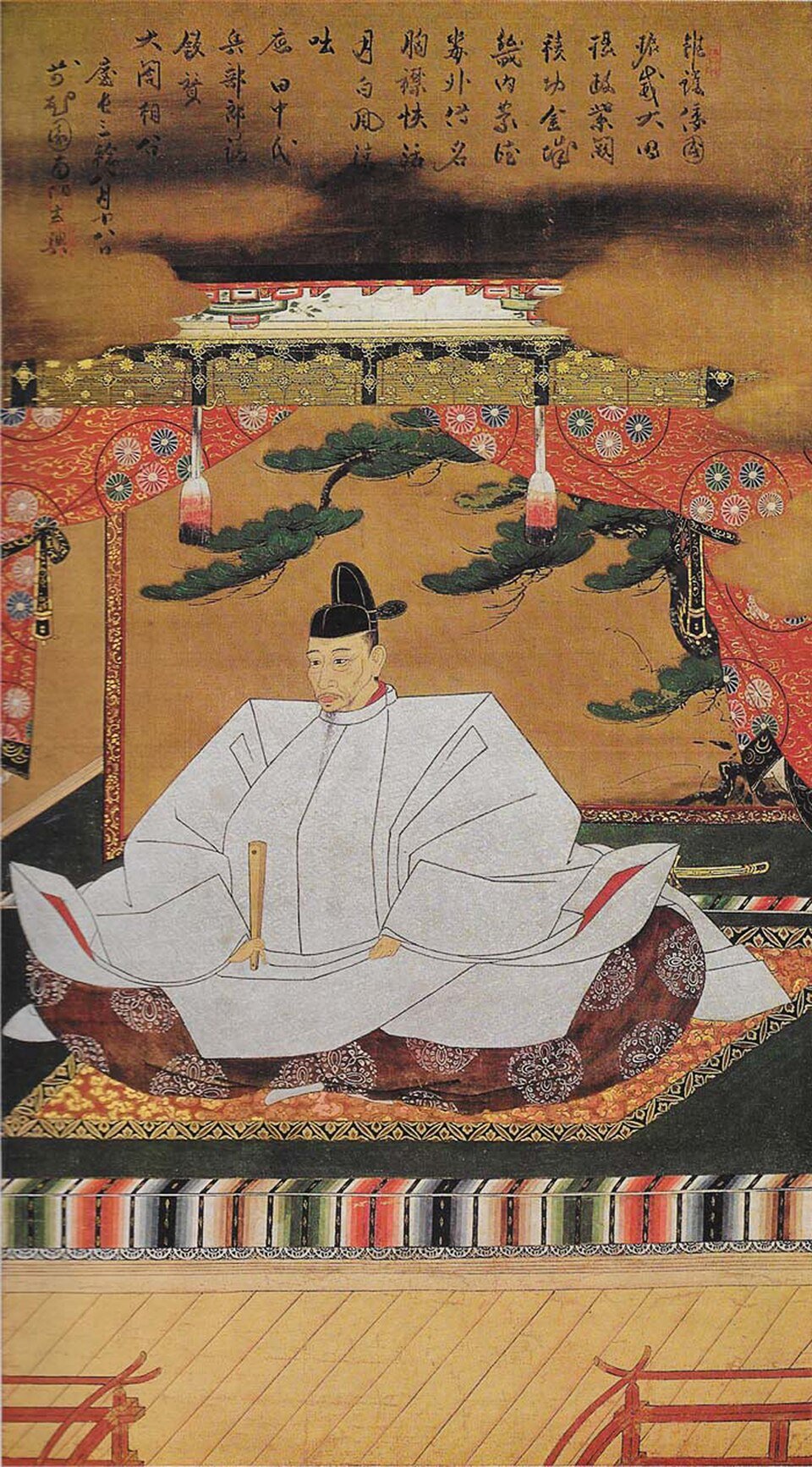
Men’s formal dress settled into the kamishimo, the stiffened sleeveless kataginu worn with matching hakama, which became the samurai’s uniform for the next 250 years.
The other novelty came by sea. Portuguese and Spanish trade brought nanban goods into elite fashion — capes and mantles, brimmed hats, ruffs, rosaries and buttons — and daimyo had themselves painted in them. Nobunaga and others wore European items as display, and buttons and the word for them entered Japanese from Portuguese.
Armour changed too, toward the tosei gusoku built to resist firearms, often with theatrical helmets.
Transition
The Edo peace redirected all this: sumptuary law pushed display underground, and the energy went into linings, dyeing technique and understatement.