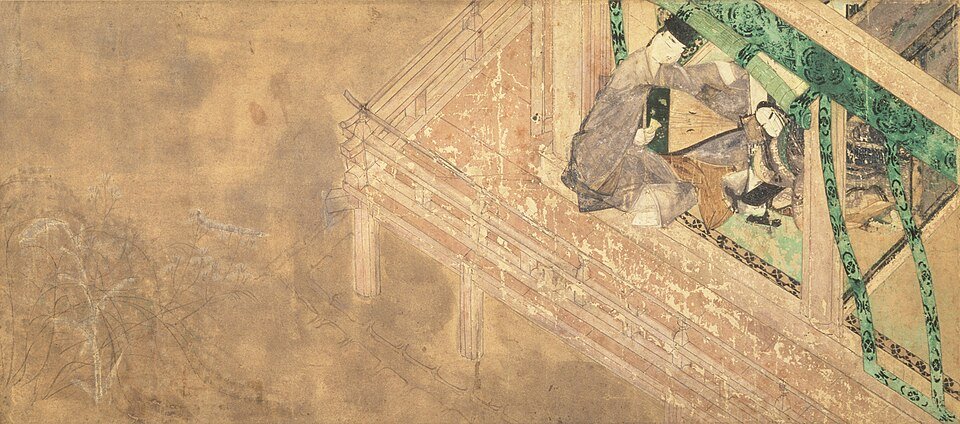
Overview
Heian court dress is the most elaborate Japan ever produced, and its art was not cut or pattern but colour seen in sequence. Once embassies to Tang ended in 894, the borrowed continental wardrobe developed into something distinctly Japanese: many layers of unlined silk, arranged so that the edges show at the collar, sleeve and hem.
Key garments and style
The women’s formal ensemble, popularly called jūnihitoe, is a set of unlined uchiki robes worn one over another beneath a karaginu jacket and a trailing mo. The number was never fixed at twelve — the nickname is later — and the weight was considerable.
The skill was kasane no irome: combinations of layered colours, each named for a flower or a season, with rules about which were worn when. Getting a combination wrong was a social error worth recording, and Heian literature does record it — The Pillow Book and The Tale of Genji both treat a woman’s layered edges as a statement of judgement and taste, since so little else of her was visible.
Men wore the sokutai for ceremony, with its stiffened cap and long train, and the lighter noshi or kariginu informally.
Beneath all of it, the kosode was worn as an undergarment.
Transition
Warrior government made this dress impractical, and it retreated to ceremony while the kosode underneath began its rise to become the kimono.