Overview
The decisive change is that the kosode came out on top. The small-sleeved robe that had been an undergarment beneath the layers of Heian court dress became the main outer garment for men and women, warrior and commoner alike, and everything recognisable as the kimono descends from it. Women kept the layered jūnihitoe only for ceremony, and the number of garments worn at once fell sharply.
Key garments and style
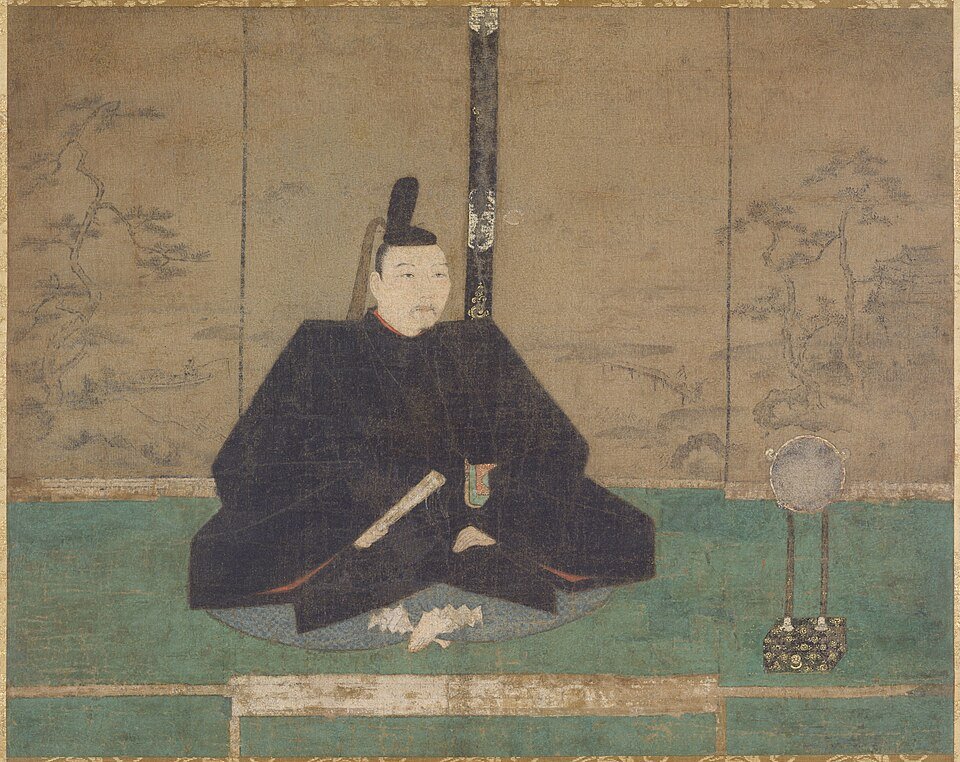
The kosode was closed with a narrow sash. The wide obi of the Edo period does not exist yet, and the Muromachi silhouette is correspondingly straight and unbroken. Warrior-class women wore the uchikake over it, an outer robe left unbelted and trailing. Men paired the sleeveless kataginu with hakama, the combination that hardened into the formal kamishimo, and wore hitatare and daimon on ceremonial occasions.
Two tastes pulled against each other. The early part of the period produced basara, a deliberately gaudy dandyism among provincial warlords; against it, the tea practice of Murata Juko and Takeno Joo taught restraint as a form of taste, and restraint proved the more lasting. Noh belongs inside this story rather than beside it. Kan’ami and Zeami performed under Yoshimitsu with no costume peculiar to the art: actors wore kosode of the day, commonly handed over by patrons on the spot. The specialised Noh wardrobe — karaori, atsuita, nuihaku — is a Momoyama development, classified into a system only under the Tokugawa, and no surviving Noh costume is earlier than Momoyama.
Kyoto wove the material for all of it. The Onin War scattered the capital’s weavers, and those who returned settled the quarter that has carried the name Nishijin ever since.
Transition
Late in the period tsujigahana appeared — tie-resist dyeing finished with ink drawing and gold leaf — and the brief, opulent Azuchi–Momoyama age that followed pushed kosode decoration to its height, before the widening obi of the Edo period changed the silhouette again.