Overview
These are the centuries in which Andean weaving became the most technically accomplished textile tradition in the pre-modern world, and the desert coast has preserved enough of it to prove the claim. Cloth here was not a craft subordinate to metal or stone; it was the medium in which wealth, rank and belief were principally expressed.
Key garments and style
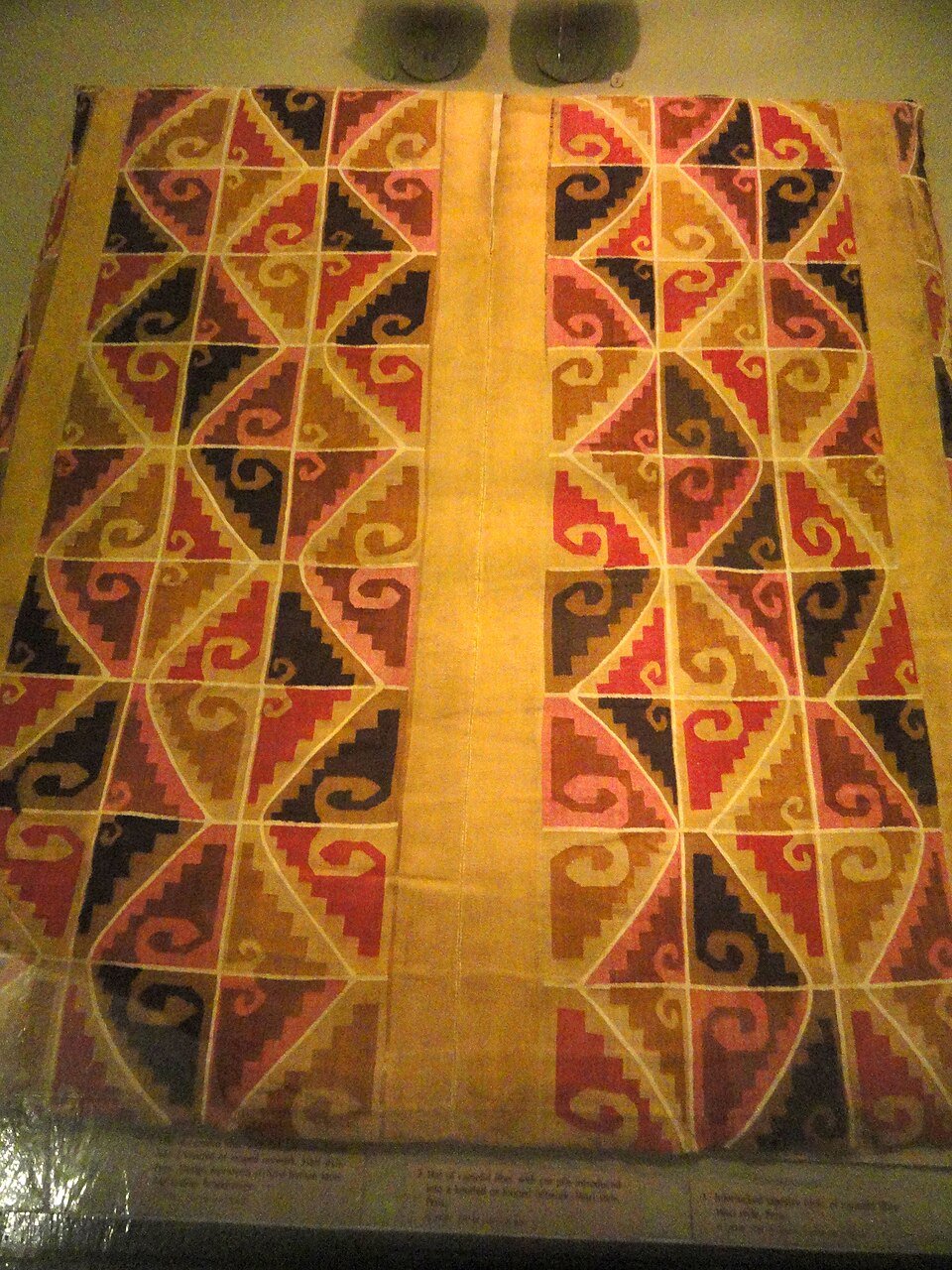
The garments stay constant — the uncu tunic, the mantle, the loincloth, the headcloth — while the surfaces carry everything. Wari and Tiwanaku tapestry tunics are woven in interlocked wool at thread counts that took months of work, their designs of staff-bearing figures and profile heads deliberately compressed and distorted until they verge on abstraction. Nazca weavers worked in fine cotton and camelid fibre with embroidery and three-dimensional needle-knitted borders; Moche potters modelled lords in ear-spools, headdresses and painted cloth so precisely that ranks can be distinguished on the vessels.
Materials carried meaning by distance. Alpaca and vicuña came from the highlands, cotton from the coast, tropical feathers and Spondylus shell from far to the north — so a single elite garment assembled goods from several ecological zones, which was part of the point.
Dyeing was correspondingly advanced, with a wide, colourfast palette from plant and insect sources including cochineal.
Transition
The late pre-Inca kingdoms, Chimú above all, carried the weaving and goldworking traditions forward, and the Inca state later absorbed both — along with the practice of using cloth as the currency of obligation.