Overview
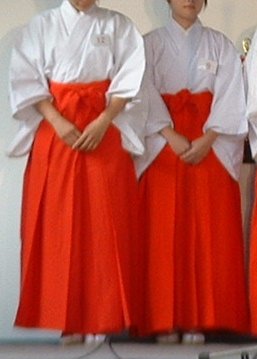
Hakama are a lower garment worn over a kimono or robe, gathered into deep pleats and secured with long ties. They come in a divided form (umanori, like trousers) and an undivided tube-skirt form (andon), and read as formal wear for both men and women.
How it is worn
Worn over the robe and tied with cords front and back, the pleats — traditionally seven, each given a moral meaning — fall in crisp vertical lines. Men’s formal hakama pair with a haori and family crests, women’s are tied higher on the waist, and deep-red hi-bakama mark shrine maidens and Heian court women.
History
Trousers of this kind are very old in Japan, but hakama became fixed as court formal wear in the Heian period, worn beneath the sokutai and kariginu. Samurai adopted them as everyday formal dress, and after Western clothing spread they narrowed to ceremonial use — graduations, kendo and kyūdō, Shinto rites, and weddings.