Overview
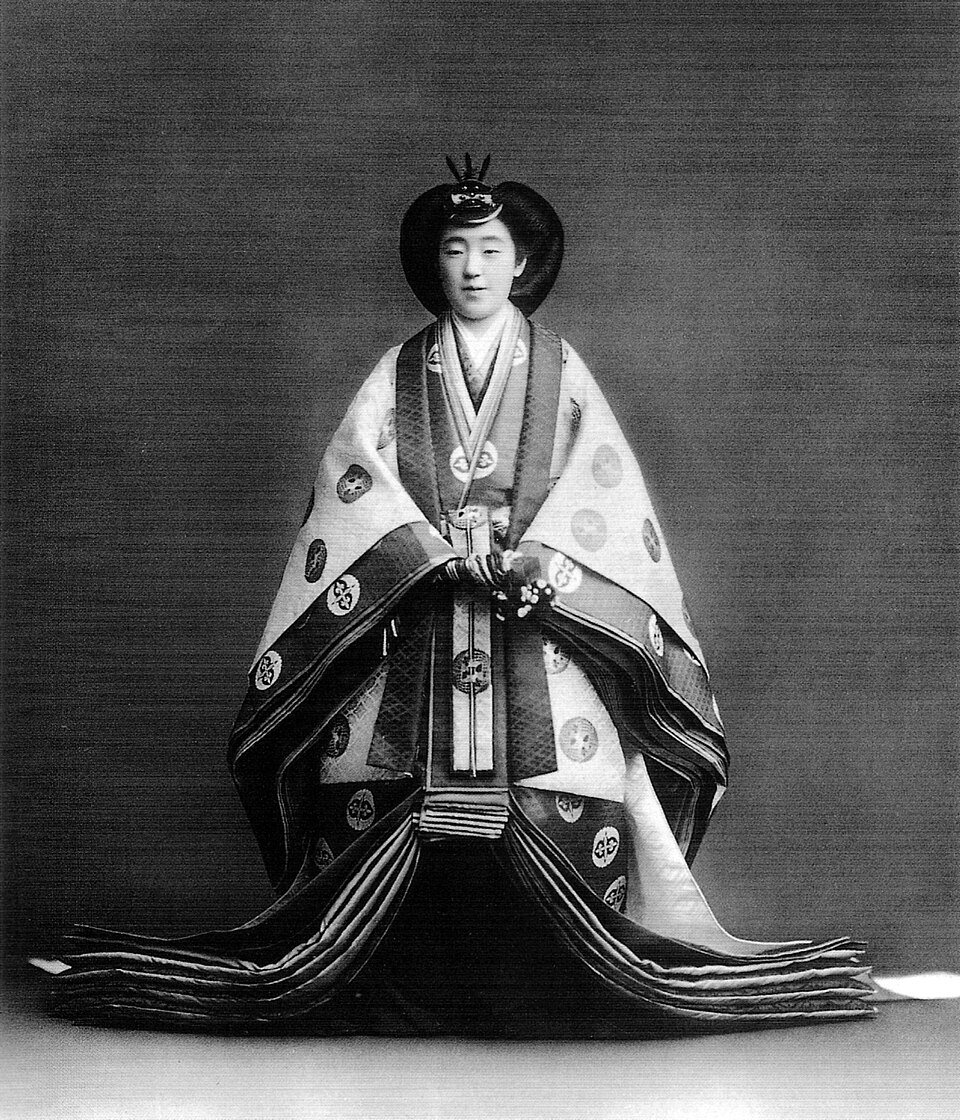
The jūnihitoe (literally twelve layers) is the grandest women’s costume of the Heian court, built from several unlined robes (uchiki) worn over a kosode and hakama, topped by a formal jacket (karaginu) and a trailing train (mo). The art lay less in any single robe than in the graded harmonies of color revealed where the layers overlapped.
How it is worn
Robes are put on one over another so each shows a band of color at the neckline, cuff, and hem; the seasonal combinations, called kasane no irome, were named for flowers and plants and judged as a mark of taste. The karaginu jacket sits on top and the pleated mo ties at the back, making the full ensemble heavy and reserved for the most formal occasions.
History
It took shape in the tenth and eleventh centuries, after Japan ended official missions to Tang China and court dress developed a national style. Everyday aristocratic dress later simplified, but the jūnihitoe survived as ceremonial wear and is still worn by women of the imperial family for enthronements and weddings.