Overview
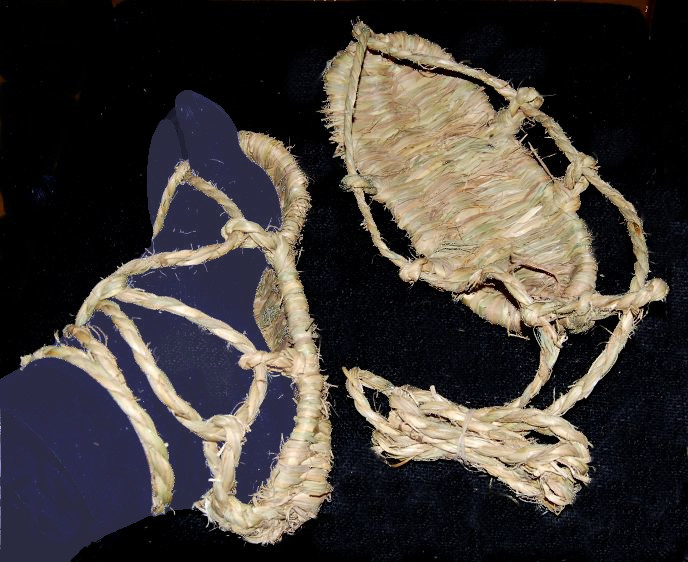
The sole is plaited from rice straw, shorter than the foot so the toes and heel overhang, and a long cord runs from the toe loop through four to six loops along the edges. Unlike the zori, which is held only by a thong, the waraji is bound to the foot at the instep and ankle, so it does not flap and cannot be lost in mud. They are cheap, quick to make from a harvest by-product, and worn out in a few days of hard walking.
How it is worn
The toe cord is gripped between the first two toes and the side cords are drawn up alternately, crossed over the instep and tied off behind the ankle; a tight lashing is the difference between a sandal and a blister. The overhanging toes are deliberate, giving grip on a slope. Travellers carried spares hanging from the pack, and shrines on old highways still sell them as a votive offering rather than as footwear.
History
Straw sandals are ancient, but the waraji becomes the standard travelling and military footwear in the Kamakura period, when foot soldiers and pilgrims put long distances on unpaved roads. The Edo highway system ran on them, with roadside stalls selling replacements the way a petrol station sells fuel. Rubber-soled tabi displaced them for work in the twentieth century, and what remains is ritual: the Nachi fire festival, mountain pilgrimage, and giant waraji hung at temple gates.