Overview
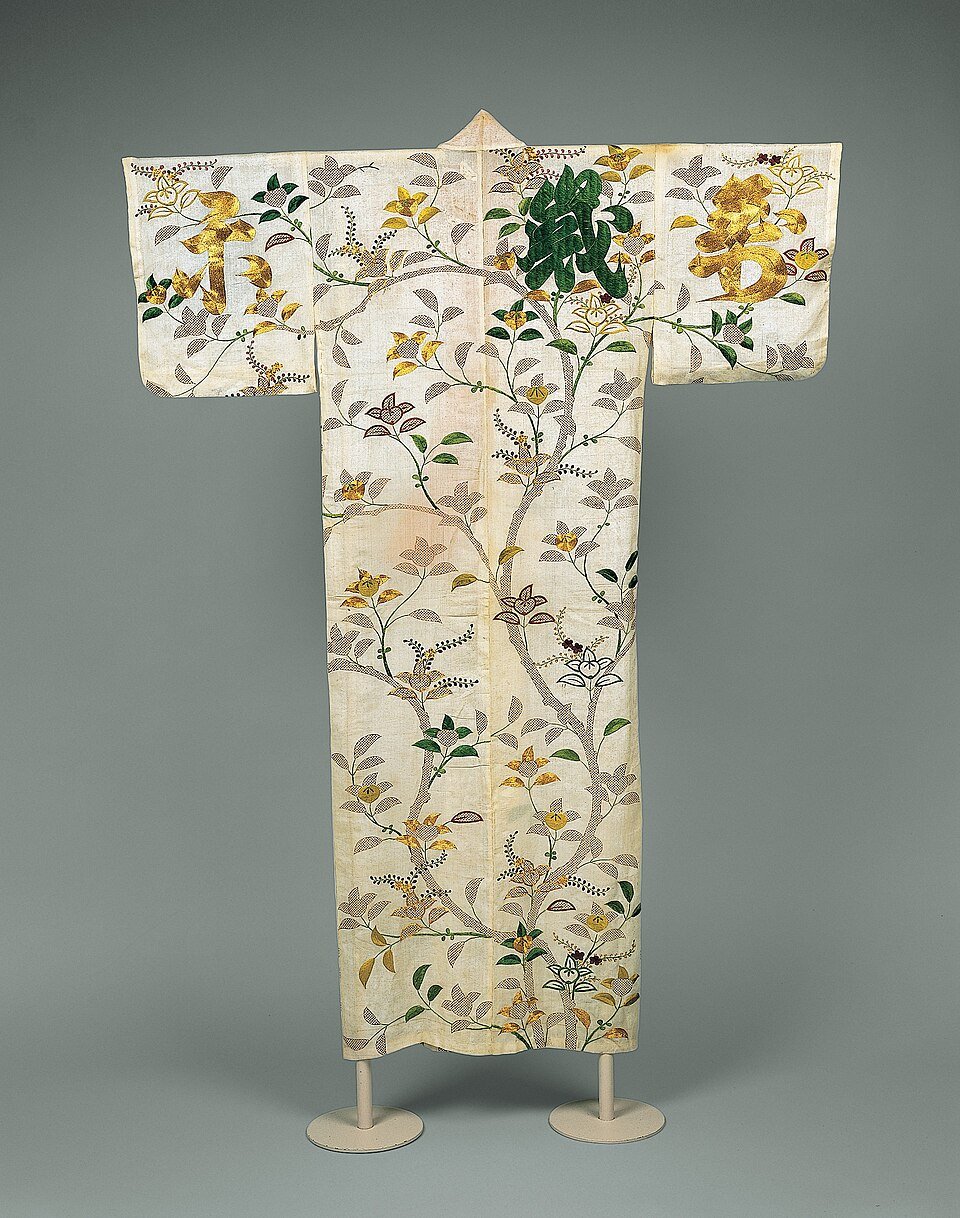
Named for its small wrist openings, the kosode began as a plain undergarment worn beneath the voluminous robes of Heian court dress. As those outer layers fell away it emerged as the principal garment, and its surface became the canvas for Japan’s great textile arts.
How it is worn
Wrapped left over right and held with a narrow sash, the kosode is cut straight so it drapes on any body. Its decoration — dyeing, embroidery, and applied gold leaf — carried the fashion of the day, and the design fields shifted across the garment as tastes changed.
History
The kosode rose to prominence in the Muromachi and Momoyama periods, when warriors and townspeople alike wore it as outerwear. Through the Edo period its cut settled into the form now called the kimono, and Edo dyeing and weaving turned it into a display of wealth and taste.