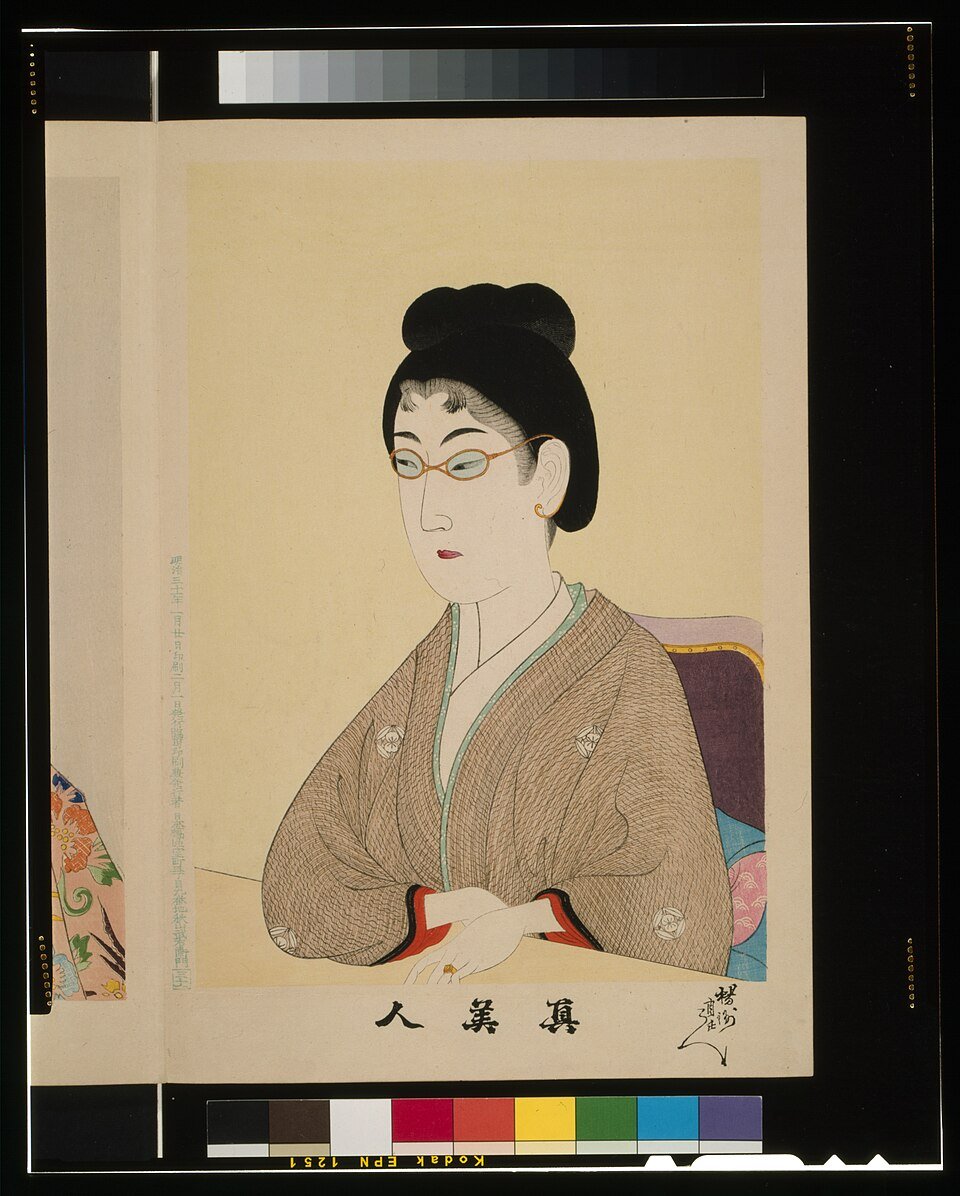
Overview
Meiji is the sharpest break in Japanese dress history, and it happened from the top down and in public first. Western clothing arrived as state policy for anyone representing the nation — soldiers, police, officials, students — while the kimono continued at home and became, in the process, something it had never been before: traditional dress.
Key garments and style
The new army, navy, police and railways were uniformed in Western cut from the start. An 1872 decree made Western clothes the formal dress of officials, and the emperor was photographed in military uniform rather than court robes, which was itself the message. Students wore the stiff-collared gakuran, still worn today.
Elite women had a briefer and more awkward exposure: the Rokumeikan receptions of the 1880s put them in Paris bustle gowns for diplomatic display, and the fashion receded with the building’s political moment.
For most people the result was a mixed wardrobe rather than a replacement — Western clothes for work and the street, kimono at home, haori and hakama for Japanese formal occasions. The word yofuku, Western clothing, required the coining of wafuku, Japanese clothing, for a garment that until then had simply been clothes.
Transition
Taisho carried Western dress out of officialdom and into a popular urban culture that chose it rather than being instructed into it.