Overview
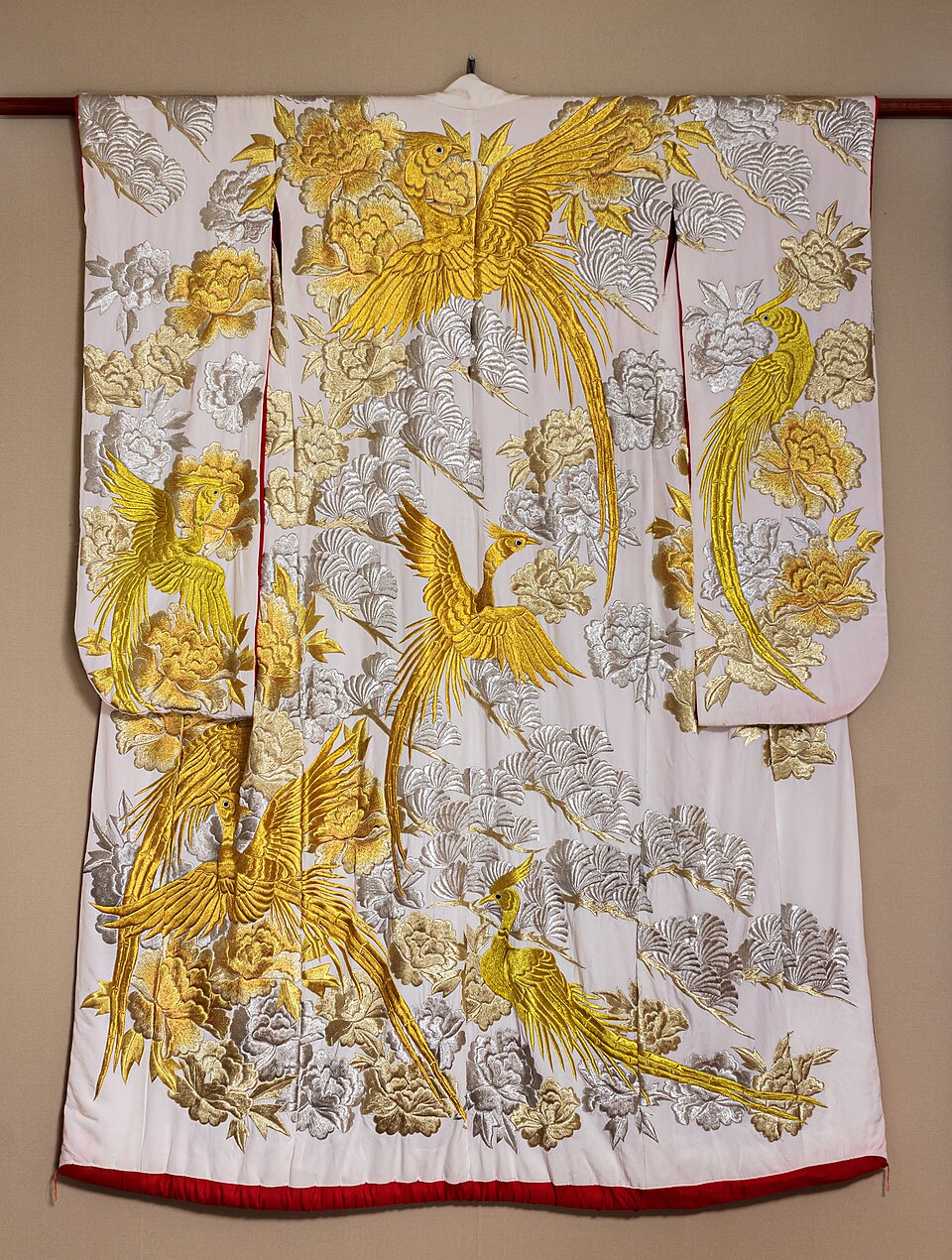
It is cut like a kimono but longer and padded at the hem, so the trailing edge holds a rolled shape rather than collapsing. The decoration is the point and it is dense: cranes, pines, waves, flowering branches, in embroidery, gold couching and dyed pattern, worked so the design reads when the garment is seen from behind and moving. White uchikake are worn for the ceremony, red and gold for the reception, and the padded hem is what makes both photograph well.
How it is worn
It goes over a complete kimono and its obi and is not tied at all — the wearer holds it closed with the hands or lets it hang, and the weight keeps it on the shoulders. The hem is allowed to trail and is gathered up by the wearer or an attendant to walk. Because nothing fastens it, it can be dropped off the shoulders in a moment, which is how a bride changes look between the ceremony and the party.
History
Trailing unbelted outer robes belong to the warrior households of the Muromachi period, where a woman of rank wore one indoors over her kosode as a mark of status. The Edo period kept it for the wives of the samurai class and for the stage, and the Meiji collapse of that class left it without an everyday occasion. The wedding absorbed it, which is why a garment that once meant rank now means one day.