Overview
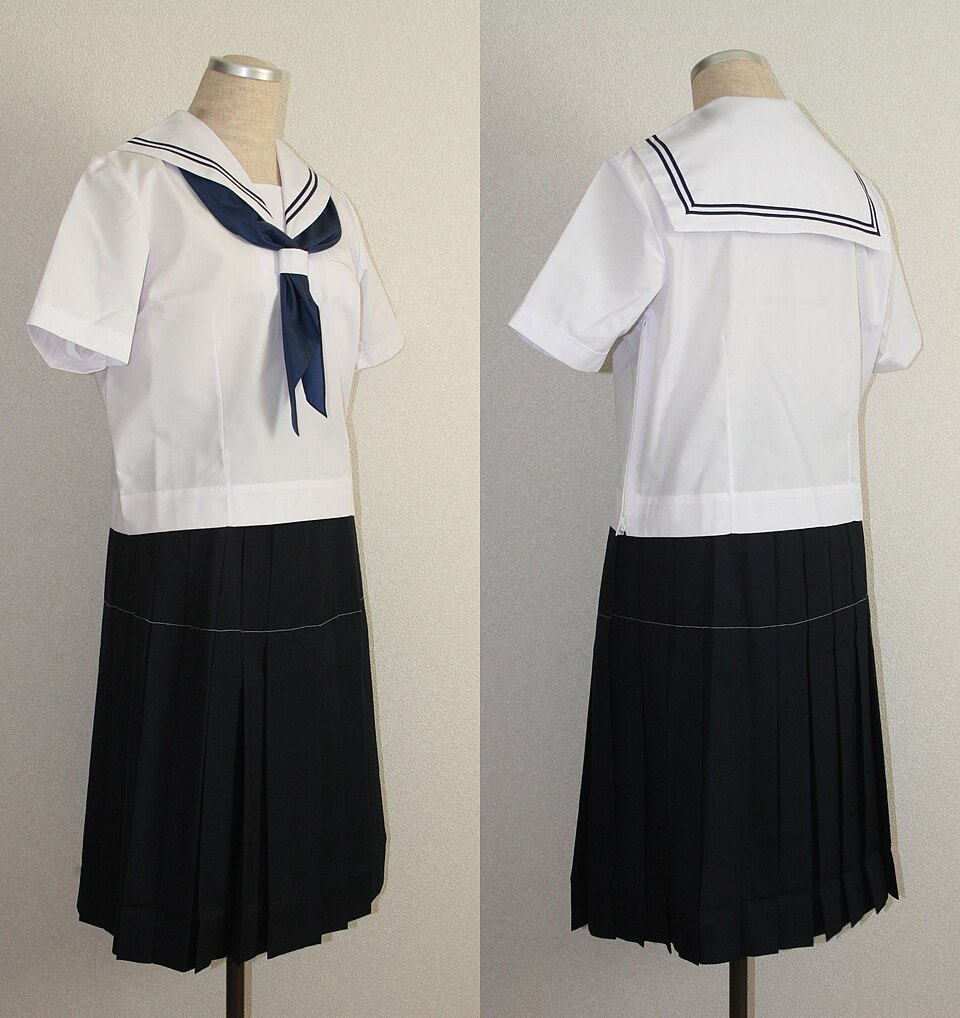
A serafuku pairs a middy blouse with a broad sailor collar and a knotted neckerchief with a pleated skirt. Adapted from European children’s sailor fashion, it replaced the earlier hakama-based schoolgirl dress with a Western-style outfit.
How it is worn
The blouse’s sailor collar and a tied kerchief or ribbon sit over a pleated skirt, and the collar stripes and kerchief color often mark a particular school. Boys’ schools more often adopted the stand-collar gakuran, which made the serafuku emblematic of girls’ schooling.
History
Japanese girls’ schools began adopting Western uniforms in the 1920s — Fukuoka Jo Gakuin and others are credited with early sailor styles around 1921 — replacing kimono-and-hakama dress. The serafuku spread nationwide and remains a familiar school uniform, though now often restyled.