Overview
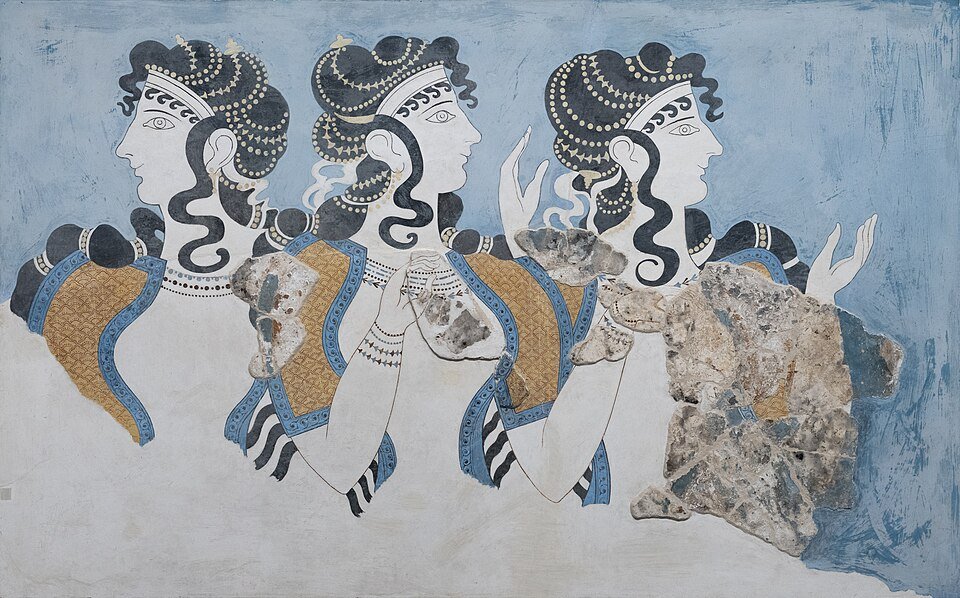
Minoan dress is the great exception in Aegean clothing history: it was cut and sewn to the body at a time when almost everything else in the Mediterranean was draped, and it would be draped again in Greece a thousand years later. Frescoes, faience figurines, seal rings and painted sarcophagi all show the same fitted silhouette, so the picture is consistent even where it is not fully explained.
Key garments and style
Women wore a skirt built from horizontal tiers of flounces, sometimes with a separate apron-like panel over it, above a bodice cut tight and left open at the breast; a heavy rolled belt pulled the waist in sharply between the two. Men wore a short loincloth or kilt, similarly belted, and were usually shown bare above it. Both were woven in strong colours and patterned in bands, spirals and rosettes, and Crete was processing murex for purple dye centuries before the Phoenicians made it famous.
The frescoes at Akrotiri on Thera, buried and so preserved unrestored, add what Knossos cannot: hair marked age, with children shaved to the scalp and given locks that grew as they did. Two cautions belong with all of this. Much of what is popularly pictured as Minoan comes through heavy modern restoration of fragmentary plaster, and the flounced skirt appears so often on goddesses and priestesses that some of it is ritual costume rather than what anyone wore to work.
Transition
Mycenaean Greece took over the Minoan silhouette along with much else, and kept it in palace art until the Bronze Age collapse took the palaces themselves. What followed on the mainland was not a development of this dress but a replacement of it: the pinned, unsewn woollen peplos of the Archaic age, made without a needle.